Oral rehabilitation in Panama

Recover the function, stability and appearance of your smile

When several teeth are worn, fractured, damaged or absent, it is not always enough to repair each problem in isolation.

Oral rehabilitation evaluates the mouth comprehensively to determine which teeth can be preserved, which need to be restored, and how to recover a functional bite and a harmonious smile through a treatment plan designed for each patient.

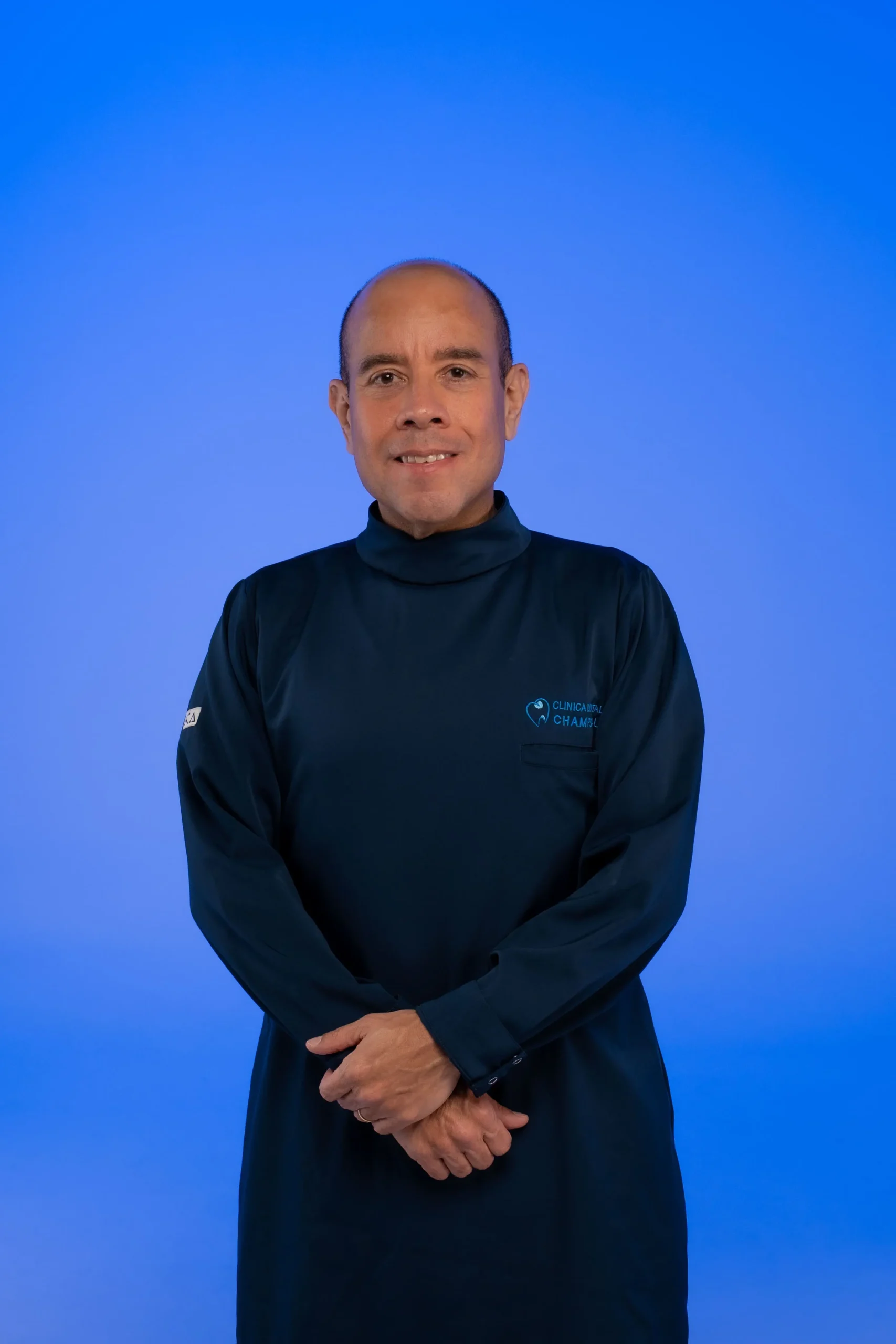
In Clínica Dental Champsaur, oral rehabilitation is performed by Dr. Juan Ernesto Champsaur Estenoz, specialist in Oral Rehabilitation, integrating diagnosis, restorative planning and digital dentistry.

Do you have worn teeth, fractured teeth, old restorations or missing parts?

Recover function

Improves chewing and stability of bite.

Restores damaged teeth

It recovers fractured, worn or weakened teeth.

Replace missing teeth

Integrates bridges, prosthesis or restorations on implants.

Improves function and aesthetics

Plan a functional, harmonious and natural smile.

What is oral rehabilitation?

Oral rehabilitation is the dental specialty responsible for diagnosing, planning and restoring the function, structure and aesthetics of damaged, worn or absent teeth.
It doesn’t necessarily mean rehabilitating the whole mouth.

In some patients treatment may concentrate on a single tooth. In others, it may be necessary to restore several parts, replace lost teeth, or coordinate different treatments within one plan.

The aim is to analyze the set: the remaining teeth, the missing parts, the gums and supporting tissues, the existing restorations, the implants when there are and the way the upper and lower teeth are related to biting.

From this evaluation, it is determined what each patient really needs.

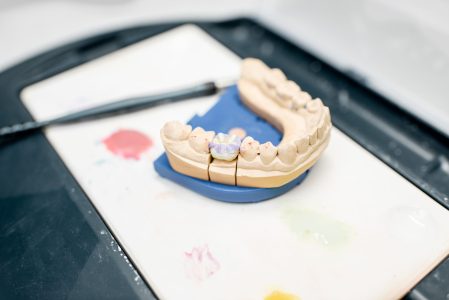
corona dental_clinica dental champsaur

When may you need oral rehabilitation?

An oral rehabilitation evaluation may be indicated when there are problems affecting one or more teeth and it is necessary to recover both the function and the dental structure.

Among the most frequent reasons for consultation are:

Not all of these cases require the same procedure. That is precisely one of the functions of the oral rehabilitation provider: to determine what to retain, what to restore and what to replace before starting treatment.

What treatments may include oral rehabilitation?

Oral rehabilitation is not a single procedure. It is a planning that can combine different types of restorations according to the condition of the teeth and the needs of the patient.

Dental crowns

A crown can be used when a tooth has lost a significant amount of structure and needs to be restorations and protected.

It may be indicated, among other situations, in weakened, fractured teeth or that have received certain root canal treatments.

Dental bridges

Bridges can be used in certain patients to replace one or more missing teeth based on dental structures prepared for this purpose.

The possibility of using a bridge depends on the state of the teeth that will support and the full analysis of the case.
Incrustrations

Inlays allow rebuilding a part of the tooth when a direct restoration is not enough, but it is not necessarily necessary to cover the entire part with a crown.

Dental cards

The veneers can be part of a rehabilitation when there is an adequate restorative or aesthetic indication.

Its use depends on the existing structure, position of teeth, bite and treatment objectives.

Removable prostheses

When several teeth are missing, removable partial prostheses can be evaluated.

Total prosthetics may also be indicated in patients who have lost all teeth from an arcade, depending on clinical conditions.

Restorations on implants

When teeth are absent, dental implants can support crowns, bridges, or other prosthetic solutions.

The implant replaces the support of the lost root; the restoration is then designed to replace the visible part of the tooth.

Oral rehabilitation, implants or crowns? They are not the same

It’s a frequent doubt.

Oral rehabilitation is the specialty that diagnoses and plans how to recover damaged or absent teeth.

A dental crown is one of the types of restoration that can be used to reconstruct or protect a tooth.

A dental implant replaces the root support of a lost tooth and may subsequently receive a crown or other prosthetic rehabilitation.

That is why one patient may need oral rehabilitation without implants, while another may need implants as part of a broader rehabilitation plan.

The choice does not depend on a predetermined solution, but on the diagnosis.

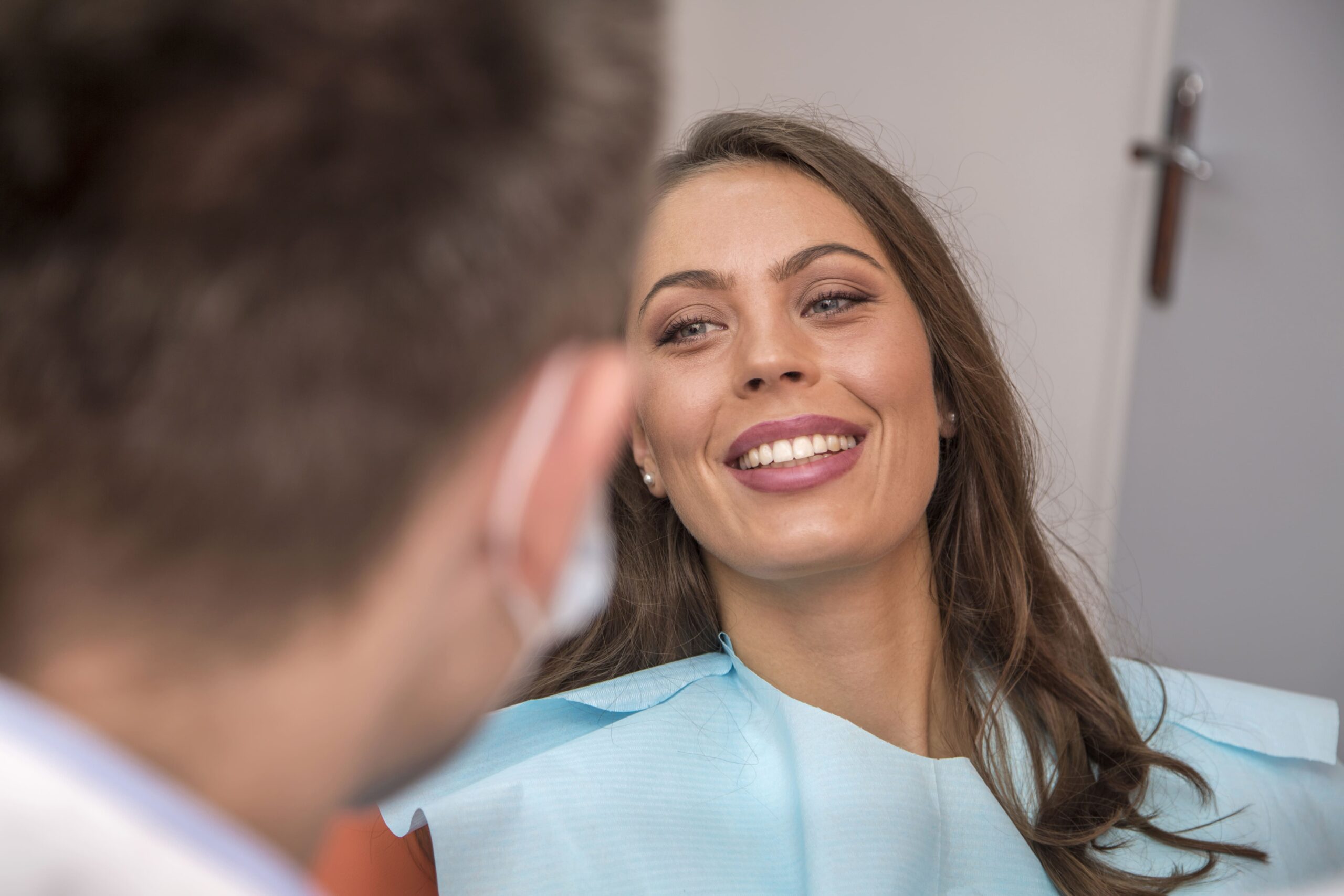
mujer sonriendo luego de rehabilitacion oral

Oral rehabilitation: function and aesthetics must be planned together

Oral rehabilitation is not just about changing the appearance of teeth.

Treatment may seek to recover lost structure, replace missing teeth, improve the ability to chew, stabilize bite, and at the same time improve shape, size, proportion, and appearance of teeth when indicated.

Aesthetics is part of the planning, but it must be integrated with the function.

Therefore, before selecting a crown, rod, bridge, prosthesis or restoration on implants, the actual state of the mouth and the way in which each restoration will be integrated with the other teeth is studied.

How is oral rehabilitation planned?

A good rehabilitation begins before preparing or restoring any tooth.

1. Initial evaluation

The first consultation allows you to know what concerns the patient and examine the general state of his mouth.

Existing teeth, missing parts, cavities, fractures, wear, old restorations, crowns, bridges, prostheses, implants, gums and supporting tissues are reviewed.

The bite and dental aesthetics are also analyzed.

2. Diagnostic records

Depending on the case, you may need:

  • Clinical photographs.
  • Periapical X-rays.
  • Panoramic X-ray.
  • Intraoral scan.
  • Digital models or study models.
  • Periodontal evaluation.
  • Analysis of the bite.
  • Evaluation of existing implants.


When the treatment incorporates implants or it is necessary to study the bone in three dimensions, CBCT CBCT scan may also be indicated.

Not all patients need the same studies.

3. Diagnosis and treatment plan

With the information obtained, the specialist determines:

  • Which teeth can be preserved.
  • What parts need restoration.
  • Which teeth present a compromised prognosis.
  • What spaces need rehab.
  • What type of restoration or prosthesis can be used.
  • If there are treatments to be done previously.

The result is a treatment plan organized according to the actual needs of the patient.

4. Control of active problems

Before placing permanent restorations it is important to control problems that may compromise treatment.

Depending on the diagnosis, it may be necessary to treat caries, infections, periodontal disease, or other conditions.

5. Complementary treatment

Complex cases may need coordination with other areas of dentistry, such as:

  • Endodontics.
  • Periodontics.
  • Orthodontics.
  • Implantology.
  • Oral surgery.
  • General dentistry.

6. Provisional restorations when indicated

In certain cases temporary restorations may be used to temporarily recover function and aesthetics and to evaluate aspects such as shape, position and bite before making definitive restorations.

7. Design and manufacture

Once the necessary preparation has been completed, the anatomy of the teeth is recorded by digital scanning or printing, as appropriate.

Restorations are designed considering the patient’s function, bite, shape and aesthetic needs.

8. Testing, placement and adjustments

Factors such as:

  • Adaptation.
  • Teeth contacts.
  • Bitten.
  • Form.
  • Function.
  • Aesthetic.

Additional adjustments may be made after placement when necessary.

9. Maintenance

Rehabilitation does not end when the definitive restoration is placed.

Subsequent controls allow monitoring of natural teeth, crowns, bridges, prostheses, implants, gums, hygiene and bite.

Oral rehabilitation with digital dentistry

Digital technology can be part of different stages of diagnosis, planning and restoration manufacturing.

Clínica Dental Champsaur has resources such as:

  • Intraoral scanner CEREC Sirona Omnicam.
  • CAD-CAM CEREC system.
  • Sirona milling unit.
  • Digital X-ray.
  • Digital photography.
  • Intraoral scan.

The CAD-CAM flow allows digital design and manufacture of certain crowns, veneers, inlays and restorations on implants.

When the type of restoration and clinical conditions permit, certain treatments can be designed, manufactured and placed directly in the clinic.

This also means that not all treatments necessarily require conventional paste impressions.

Is it possible to make a crown on a single date?

In certain cases, yes.

The CAD-CAM CEREC technology available at Clínica Dental Champsaur allows some individual restorations to be scanned, designed, manufactured and placed within a digital flow in the clinic.

However, not all crowns and rehabilitations can be carried out on a single visit.

The possibility depends on the tooth, the type of restoration, the selected material and the clinical complexity.

A multi-tooth rehabilitation may require several appointments and different stages of treatment.

What if I need other treatments before rehab?

It is quite common for complex rehabilitation to require more than one specialty.

For example:

Periodontics

If active periodontal disease exists, the gums and supporting tissues may need treatment before establishing certain definitive restorations.
Endodontics

It may be necessary when a tooth has a pulp disorder that must be treated before receiving its definitive restoration.
Orthodontics

When the position of the teeth or the distribution of the spaces needs to be modified before rehabilitation.

Dental implants

They can be incorporated when one or more missing teeth need to be replaced.
Oral surgery

It may be necessary for extractions or other surgical procedures associated with the plan.

Oral rehabilitation allows these stages to be coordinated so that they are not performed as isolated treatments without considering the final outcome.
Are there cases where another problem must first be addressed?

Yeah.

Oral rehabilitation does not replace the treatment of all diseases or disorders of the mouth.

Before performing certain restorations it may be necessary to treat first:

  • Periodontal disease active.
  • Dental infections requiring endodontics.
  • Maloclusions whose main indication is orthodontics.
  • Impacted teeth that require surgery.
  • Bone deficiencies that need surgical treatment.

Problems with the temporomandibular joint, facial pain, headaches, or cervical pain also require a specific diagnosis to determine their origin before attributing them to the bite or indicating rehabilitation.

Also, not all teeth can be preserved. Their prognosis depends on the state of the roots, bone, gums, and the amount of dental structure that remains.

How long does an oral rehabilitation last?

There is no equal duration for all patients.

An individual restoration can be resolved in one or a few appointments.

A multi-tooth rehabilitation may require different visits for several weeks.

When the plan includes implants, surgery, periodontal treatment, orthodontics, or other previous procedures, the process can develop in different phases over several months.

Therefore, the estimated time is set after the diagnosis and not before the case is known.

What can be achieved with oral rehabilitation?

Depending on the initial status and treatment indicated, a rehabilitation may help:

  • Recover lost dental structure.
  • Restore damaged or fractured teeth.
  • Replace missing teeth.
  • Recover chewing capacity.
  • Improve the functional stability of the bite.
  • Improve dental form and proportion.
  • Integrate natural teeth and restorations on implants.
  • Improve the aesthetics of the smile when part of the plan.

The results depend on the initial diagnosis, the state of teeth and tissues, the complexity of the case, the materials used, the patient’s habits and subsequent maintenance.

Restorations are not permanent for life and may need maintenance, repair, or replacement over time.

Specialist in Oral Rehabilitation.

Dr. Juan Ernesto Champsaur Estenoz

He is a graduate dentist from the Central University of Ecuador and has specialized in Oral Rehabilitation at the Pontificia Universidad Javeriana in Bogotá, Colombia.

His practice includes: Oral rehabilitation. Fixed prosthesis. Dental aesthetics. Implantology. Digital dentistry. His function as a rehabilitation is not simply to select a crown or prosthesis, but to analyze the whole case and organize the different stages necessary to reconstruct one or several teeth in a coherent way.

Request an evaluation of Oral Rehabilitation in Panama

If you have worn, fractured, deteriorated or absent teeth, the first step is not to choose a crown, implant, or prosthesis on your own.

The first step is to determine what your mouth really needs.

Schedule an evaluation with Dr. Juan Ernesto Champsaur Estenoz, specialist in Oral Rehabilitation, to examine your teeth, bite, and supporting structures and develop a personalized treatment plan.

Frequently Asked Questions about Oral Rehabilitation

It is the dental specialty that diagnoses and plans the recovery of damaged, worn or absent teeth to restore structure, function and aesthetics.

It can involve a single tooth, several pieces, or more extensive rehabilitation.

In Dental Clinic Champsaur in Bethania, Panama City, oral rehabilitation is carried out by Dr. Juan Ernesto Champsaur Estenoz, specialist in Oral Rehabilitation at the Pontifical Javeriana University of Bogotá.

Its practice integrates oral rehabilitation, fixed prosthesis, aesthetics, implantology and digital dentistry.

No.

Oral rehabilitation can treat from a single tooth to several teeth or a complete gag. The extent of treatment is determined after assessing which parts can be stored, which need restoration, and which parts should be replaced.

Depending on the case, it may include crowns, bridges, inlays, veneers, removable prostheses, total prosthesis and implant restorations.

It may also require coordination with endodontics, periodontics, orthodontics, implantology, or surgery.

There are different alternatives.

Depending on how many teeth are missing, the condition of the remaining teeth, bone, and other clinical conditions, dental implants, bridges, or removable prostheses can be evaluated.

The implant replaces the root support of an absent tooth.

The crown corresponds to the visible part of the restoration and can be placed on a prepared natural tooth or on an implant.

A crown covers a larger surface of the tooth and can be used when there is a significant loss of structure or need for protection.

A rod covers mainly the visible surface of the tooth and is used in specific indications to modify shape, proportion or appearance.

The diagnosis determines which option is appropriate.

It is a restoration made out of the mouth or through a digital flow to rebuild a part of the tooth.

It can be used when a direct restoration is not enough, but it is not necessary to cover the entire tooth with a crown.

In certain cases, yes.

Clínica Dental Champsaur has CAD-CAM CEREC technology to design and manufacture certain restorations directly in the clinic.

The possibility of completing the restoration in a single appointment depends on the condition of the tooth and the type of restoration.

There is no single price because a rehabilitation can involve from a single tooth to multiple restorations and different specialties.

The cost depends on the number of teeth involved, the necessary treatments, the materials and the complexity of the case.

After the evaluation, the treatment plan and the corresponding budget are established.

A lifetime cannot be guaranteed.

Restorations need hygiene, control and maintenance. Over time some may require adjustments, repair or replacement.