Orthodontics in Panama

Improve the position of your teeth and your bite with orthodontic treatment planned according to your diagnosis, age, and needs.

At Clínica Dental Champsaur we offer Orthodontics treatments in Panama for children, adolescents and adults, including braces, self-ligating systems, aesthetic options, lingual orthodontics and clear Invisalign® aligners.

The treatments are evaluated by Dr. Desirée Champsaur, specialist in Orthodontics, who determines which alternative can best be adapted to each case after the diagnostic study.

Save your tooth

Avoid unnecessary extractions

Pain Relieve

Effective treatment for dental pain

Avoid extraction

Conservative and safe solution

Protect your oral health

Prevents infections and complications

What is Orthodontics?

Orthodontics is the dental specialty responsible for diagnosing and treating alterations in the position of teeth and in the relationship between arcades.It may also intervene in certain problems related to the growth and development of maxillae in children and adolescents.
Depending on the diagnosis, treatment may help:

Each case requires an individual evaluation. Not all dental or maxillary alterations are treated in the same way or need the same type of apparatusology.

Uso de Invisalign_Clinica Dental Champsaur

What problems can Orthodontics treat?

Orthodontics may be recommended when there is an alteration of the dental position, bite or, in growing patients, dentofacial development.

Narrow or out-of-position teeth

The stacking appears when there is not enough space for the teeth to maintain a proper position within the arcade.

It can be seen as:

  • Overlay teeth.
  • Rotated teeth.
  • Teeth moved forward or backward.
  • Lack of space for certain teeth.
  • Dental eruption outside the expected position.

Planning depends on the space available, the position of the roots, the bite and other factors of the patient.

Spaces between teeth

Orthodontics can also be used to correct or redistribute spaces between teeth when there is a clinical indication.

Before closing a space it is important to determine its cause and determine how it should be distributed according to the bite and the patient’s overall plan.

Overbite and deep bite

A deep bite occurs when the upper teeth overly cover the lower teeth by closing the mouth.

The need and way to correct it depend on the dental and skeletal characteristics of the patient.

Crossbite

It occurs when one or more upper teeth bite inside the lower teeth.

It may affect a specific area or a larger part of the bite and needs to be evaluated to determine the appropriate time and type of treatment.

Open bite

It exists when certain upper and lower teeth do not make contact when closing the mouth.

It may have different causes, so treatment depends on the diagnosis and characteristics of each patient.

Other bite disorders

The following can also be evaluated:
  • Certain Class II and Class III malocclusions.
  • Alterations of the midline.
  • Protrusion of the anterior teeth.
  • Contained or impacted teeth susceptible to orthodontic management.
  • Relapse after prior Orthodontic treatment.

How do we know what Orthodontics treatment you need?

Choosing between braces, aligners or another system should not begin with an aesthetic preference.

First, it is necessary to establish:

  • What a problem there is.
  • What teeth need to move.
  • How do the arcades relate?
  • State of roots, bone and gums.
  • Space available.
  • Age and growth of the patient.
  • Treatment objectives.
  • Possibility to use each system properly.
Initial evaluation

The query may include:

  • Medical and dental history.
  • Main reason for consultation.
  • Facial and smile evaluation.
  • Intraoral examination.
  • Position of the teeth.
  • Analysis of the bite.
  • Status of gums and supporting tissues.
  • Hygiene and presence of cavities.
  • Evaluation of growth in children and adolescents.
  • Review of previous dental treatments.

The necessary records are then requested to complete the diagnosis and establish the plan.

Sonrisa ortodoncia_Clinica Dental Champsaur

Studies to plan an Orthodontic treatment

The studies are indicated individually according to the needs of each patient.

They may include:

It allows to observe present teeth, roots, dental development, retained teeth and general structures.

It can be used to study the relationships between teeth, maxillary and facial structures, especially when it is necessary to analyze growth and development.

Facial and intraoral photographs allow documenting the initial conditions and supporting the analysis of the case.

They allow to study the position of the teeth, spaces, shape of the arcades and relation of the bite.

It is especially important in adults and patients with a history of gum disease.

It is not a routine part of all Orthodontics treatments.

It can be requested when a case needs additional three-dimensional information, e.g. in the face of certain impacted teeth, bone disturbances or situations of greater complexity.

Types of Orthodontics We Offer

There is no system of Orthodontics that is automatically better for all patients.

The choice depends on the diagnosis, necessary movements, complexity of the case, age, habits and ability to follow the indications of treatment.

Conventional Braces

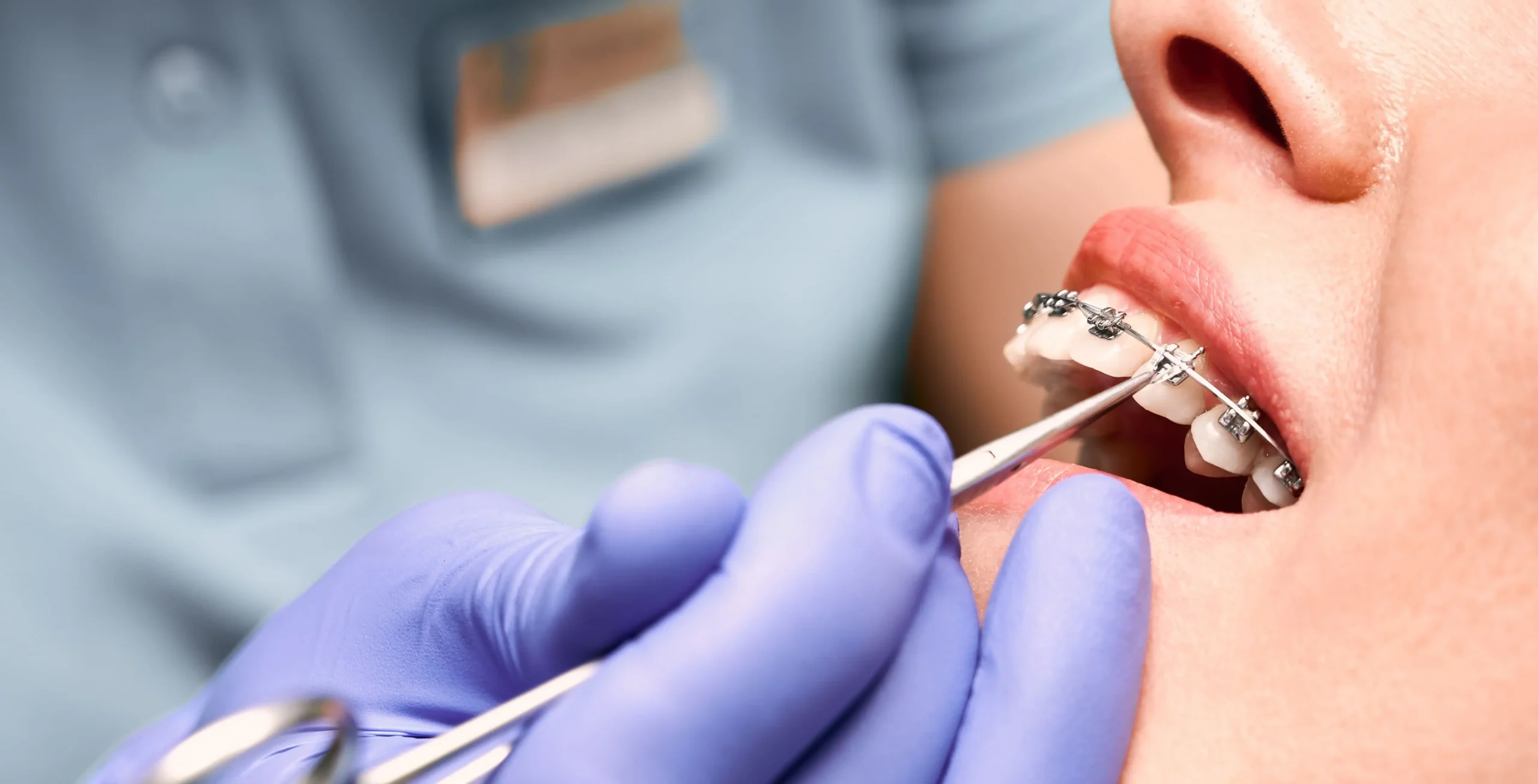
Braces are an alternative widely used to perform different types of dental movements.

They adhere to the teeth and are connected by orthodontic arcs that allow to apply controlled forces to progressively modify their position.

They can be used in adolescents and adults when indicated.
Self-ligating Orthodontics

Self-ligation systems use braces designed to hold the bow using a mechanism built into the bracket itself.

Like other systems, their indication depends on the type of movements and the characteristics of the case.

The choice of self-leading should not be based solely on the appearance of the device or on promises of a shorter duration. Dr. Desirée determines whether this system provides advantages for the specific objectives of the patient.
Aesthetic bracelets

Aesthetic braces offer a less visible alternative than conventional metal braces.

They may be an option for patients who want to decrease the visual contrast of the apparatusology during treatment.

The possibility of using them depends on the required movements and the plan established.
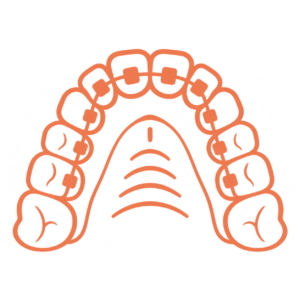
Language orthodontics

In the linguistic Orthodontics the braces are placed on the inner surface of the teeth, so they are much less visible from the front.

Not all patients and all movements are candidates for this system.

Its indication requires a specific evaluation of the bite, dental position and treatment objectives.
Invisalign® and Transparent Aligners

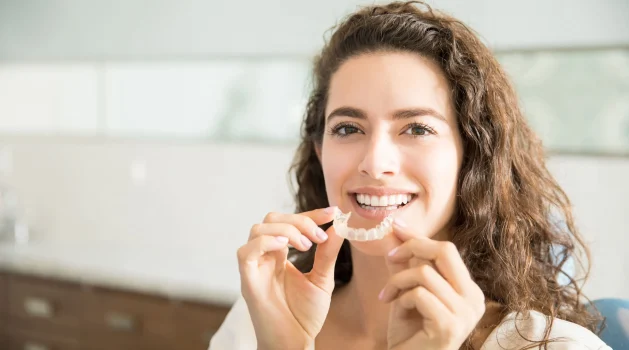
Transparent aligners use a sequence of removable devices designed to perform progressive dental movements.

Invisalign® is one of the clear aligner systems available at Clínica Dental Champsaur.

In order for the treatment to work properly, the patient must comply with the established regimen of use and assist with its controls.

Not all cases can be treated in the same way with aligners.
Braces or transparent aligners?

There is no one-size-fits-all answer.

The right alternative depends mainly on the diagnosis.

Braces can be considered when:

  • Movements are needed that can be properly controlled with fixed apparatusology.
  • The patient prefers not to rely on removing and placing the devices.
  • The specialist determines that they offer appropriate control for the case.

Aligners may be considered when:

  • The required movements are compatible with the system.
  • The patient wants a more discreet and removable alternative.
  • There is capacity and commitment to use them during the time indicated.
  • The specialist determines that they are appropriate to achieve the intended objectives.

The decision must be made after the orthodontic study and not only for an aesthetic preference.

Orthodontics for adults

Orthodontics is not limited to children and adolescents.

Adults can also treat as long as the conditions of teeth, roots, bone and gums allow the necessary movements.

In adult patients it is especially important to assess:

  • Periodontal health.
  • Existing bone loss.
  • Previous restorations.
  • Crowns or bridges.
  • Missing teeth.
  • Existing or planned implants.
  • Previous dental treatments.
  • Further rehabilitation needs.

In certain cases Orthodontics is part of an interdisciplinary treatment to prepare the position of teeth before rehabilitation, implant or other procedure.

Orthodontics for adolescents

Adolescence is a frequent stage for performing Orthodontic treatments because many permanent teeth have already erupted and facial growth may still exist.

During the evaluation, the following are analysed:

  • Teeth alignment.
  • Space available.
  • Bitten.
  • Dental development.
  • Growth.
  • Hygiene.
  • Need for braces, aligners or other apparatusology.

The appropriate alternative and timing depend on each case.

Orthodontics in growing children and patients

How long does an Orthodontic treatment last?

There is no identical duration for all patients.

It depends on factors such as:

  • Type of malocclusion.
  • Quantity and complexity of movements.
  • System used.
  • Age and growth.
  • Biological response.
  • Teeth and gum health.
  • Assistance to controls.
  • Proper use of elastics or aligners.
  • Breaks or incidences during treatment.

As a general reference, many complete bracet treatments can be found approximately 12 to 24 months, although simpler or more complex cases may require different times.

After the diagnostic study we can offer you a specific estimate for your case.

Orthodontic Specialist

Dr. Desiree Champsaur

Orthodontics treatments at Clínica Dental Champsaur are evaluated by Dr. Desirée Champsaur.

She is an dentist who graduated in 2001 and a specialist in Orthodontics from the Pontificia Universidad Javeriana de Bogotá, Colombia, since 2006.

Request an orthodontic evaluation in Panama.

If you want to improve the position of your teeth, have crowding, spaces, a bite alteration, or want to know if braces or aligners are right for you, the first step is to make a diagnosis.

During the evaluation, Dr. Desirée Champsaur will analyze your teeth, bite and needs to establish the available alternatives.

Frequently Asked Questions about Orthodontics

Depends on the problem.

Some children only need follow-up as they grow up, while certain bite or development disorders may benefit from early intervention.

Teenagers and adults can also perform Orthodontics when their dental and periodontal conditions allow.

Yeah.

Teeth can move orthodontically in adults whenever there is a proper evaluation of teeth, roots, bone, and gums.

Depending on the diagnosis:

  • Metal bracelets.
  • Self-leading orthodontics.
  • Aesthetic bracelets.
  • Language orthodontics.
  • Transparent liners.
  • Invisalign®.
  • Orthopaedic apparatus for growing patients.

There is no better alternative for everyone.

The choice depends on the necessary movements, complexity of the case, bite, habits and ability of the patient to comply with the indications.

The orthodontist determines which system is most appropriate after diagnosis.

No.

The indication depends on the necessary movements, complexity of the case and the patient’s ability to comply with the regimen of use.

In certain cases, yes.

It should first be assessed whether the alteration is primarily dental, skeletal or a combination of both.

Treatment depends on the cause, age and characteristics of the patient.

It depends on the diagnosis and complexity.

As a general reference, many complete bracet treatments can be found at around 12 to 24 months, but there are cases of shorter or longer duration.

After the study an individual estimate is offered.

During active treatment, controls can be performed approximately once a month.

The exact frequency may change according to the treatment system and evolution.

It can cause pressure, tenderness, or temporary discomfort after placing or adjusting the apparatusology.

These discomforts usually decrease progressively over the following days.

The cost depends on the diagnosis, duration, complexity and system selected.

After the evaluation and study of the case you will receive a budget based on the recommended treatment.

Yeah.

Orthodontics treatments at Clínica Dental Champsaur can be paid by monthly fees.

Once the plan is defined, the budget is provided and the patient is explained the dues for his treatment.